
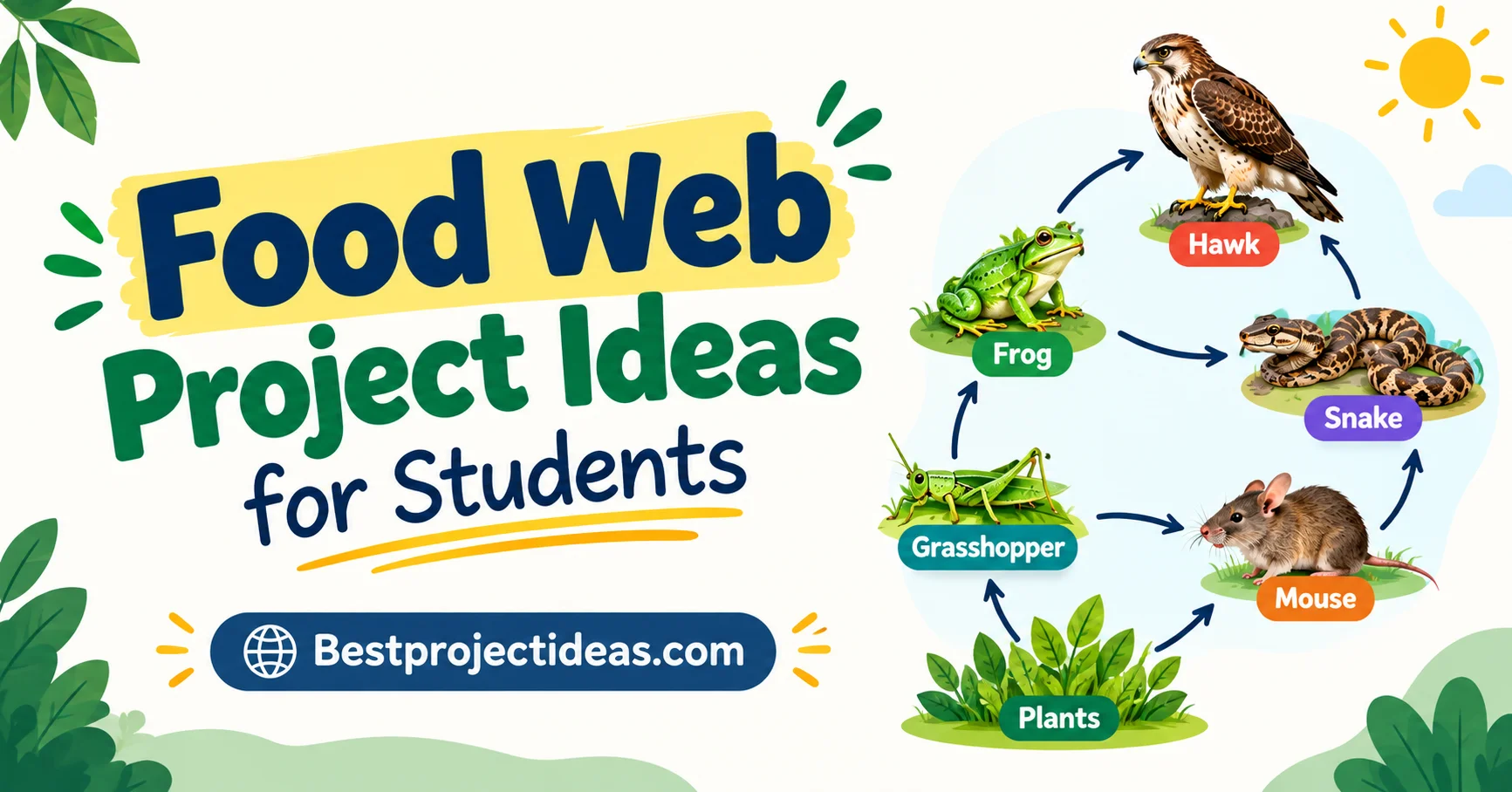
Food webs turn a list of organisms into a picture of nature in action. They show how plants, animals, fungi, and microorganisms connect through feeding relationships, revealing who eats whom and how energy moves through an ecosystem. For students, food webs offer endless opportunities to investigate habitats, build models, create artwork, use technology, and explain environmental changes. A well-designed project can transform a textbook concept into something visual, practical, and memorable. Whether you prefer drawing, experimenting, researching, coding, or presenting, there is a food web project idea that can match your interests while strengthening observation, science, creativity, and communication skills.
What Is a Food Web?
A food web is a network of interconnected food chains within an ecosystem. Instead of showing only one feeding pathway, it shows the many relationships among organisms. Arrows usually point from the organism being eaten toward the organism receiving the energy, helping students trace how energy moves through the ecosystem.
Also Read: Front Page Project Ideas: Creative, Simple and Easy Designs for School Students
How Food Webs Work
Food webs begin with producers, such as plants and algae, which capture energy from sunlight. Consumers obtain energy by eating plants or other animals, while decomposers such as fungi and many microorganisms break down dead material and return nutrients to the environment. Because organisms often have several food sources and predators, food webs provide a more realistic picture of ecosystem relationships than a single food chain.
Producers
Plants, algae, and some microorganisms make their own food and form the base of many food webs.
Consumers
Herbivores, carnivores, omnivores, and other consumers obtain energy by feeding on other organisms.
Decomposers
Fungi and microorganisms break down dead matter and help recycle nutrients through the ecosystem.
Why Food Web Projects Matter
A project allows students to visualize connections that can be difficult to understand from a textbook alone. By building, drawing, researching, or simulating a food web, students can explore trophic levels, energy flow, population changes, biodiversity, and the effects of environmental disturbance.
120 Food Web Project Ideas for Students
Each idea below is intentionally brief, making the list easy to scan, assign, copy, and adapt for classroom or science-fair projects.
Creative Food Web Projects
- Draw a colorful forest food web poster
- Create a layered rainforest food web collage
- Paint an ocean food web mural
- Design a desert food web comic
- Make a pond food web paper craft
- Build a food web using magazine cutouts
- Create a food web using pressed leaves
- Design a 3D food web diorama scene
- Make organism puppets for food web storytelling
- Create a food web flipbook with arrows
- Design a recycled-materials food web sculpture
- Illustrate a food web through animal masks
- Create a food web using yarn connections
- Design a habitat-themed food web mandala
- Make a movable food web wheel
- Create a food web storybook for children
- Design a food web using clay organisms
- Build a shoebox food web theater
- Create a food web with painted stones
- Design a seasonal food web calendar
- Make a food web infographic poster
- Create a food web using origami animals
- Design a food web board game
- Build a food web with cardboard animals
Digital Food Web Projects
- Create an interactive food web presentation
- Build a food web using digital drawing
- Design an animated food web video
- Create a food web infographic online
- Make a clickable ecosystem food web diagram
- Build a food web simulation with coding
- Create a digital food web using Canva
- Design a food web animation in Scratch
- Create an ecosystem food web slideshow
- Build a digital food web using icons
- Make an interactive food web quiz
- Create a food web using presentation hyperlinks
- Design a virtual habitat food web
- Build a food web model with spreadsheets
- Create a food web timeline animation
- Design a digital food web escape room
- Make a food web video with narration
- Create a virtual food web gallery
- Build a food web using simple HTML
- Design a food web using online mindmaps
- Create a food web with drag-and-drop elements
- Build a digital predator-prey network model
- Make an interactive ecosystem using Genially
- Create a food web podcast episode
Hands-On Food Web Projects
- Build a forest food web with string
- Construct a pond food web using cards
- Create a grassland food web with sticks
- Build a food web using bottle caps
- Model feeding relationships with paper plates
- Create organism cards for a food web
- Build a food web using magnetic pieces
- Make a food web with wooden craft sticks
- Create a food web using clothespins
- Build a food web with reusable materials
- Test food web changes using roleplay
- Create a living food web classroom activity
- Build a food web using LEGO organisms
- Model energy flow with colored tokens
- Create a food web using toy animals
- Build a habitat box with feeding links
- Simulate predator removal using organism tokens
- Model population changes using counters
- Create food chains before connecting them
- Build a food web with index cards
- Demonstrate trophic levels using stacked cups
- Create an ecosystem balance activity with yarn
- Build decomposer connections using fungi models
- Model sunlight energy with directional arrows
Research-Based Food Web Projects
- Research a local pond food web
- Investigate a rainforest food web
- Study food webs in coral reefs
- Compare Arctic and desert food webs
- Research food web changes after wildfires
- Investigate invasive species impacts on food webs
- Study pollution effects on aquatic food webs
- Research endangered species within local food webs
- Analyze seasonal changes in a food web
- Investigate drought effects on grassland food webs
- Study decomposition within forest food webs
- Research human impacts on marine food webs
- Compare natural and urban ecosystem food webs
- Investigate climate change and food web shifts
- Research keystone species and food web stability
- Study pesticide effects on agricultural food webs
- Investigate overfishing and marine food webs
- Research food webs in mangrove ecosystems
- Study parasites within a local food web
- Investigate nutrient cycles and food webs
- Research decomposers and ecosystem recycling
- Compare simple and complex food webs
- Study biodiversity and food web resilience
- Investigate habitat loss and feeding relationships
Classroom and Presentation Food Web Projects
- Present a food web using role cards
- Create a food web teaching board
- Design a classroom food web challenge
- Host a food web guessing game
- Make a food web matching activity
- Create a trophic level sorting competition
- Design a food web treasure hunt
- Organize a food web relay activity
- Create a food web question wheel
- Present predator-prey relationships through skits
- Make a food web vocabulary display
- Create a food web concept map
- Design a food web classroom quiz
- Host an ecosystem food web debate
- Create a food web observation worksheet
- Develop a food web peer teaching lesson
- Design a food web mystery investigation
- Create a food web exit ticket
- Make a food web group challenge
- Present food web changes through news reports
- Create a food web museum exhibit
- Design a food web science fair display
- Create a food web assessment rubric
- Lead a food web review session
How to Make Your Food Web Project Stand Out
Choose a clear ecosystem
Focus on one habitat so the organisms and feeding relationships remain easy to understand.
Label every organism
Include common names and, where appropriate, scientific names or organism categories.
Show energy flow correctly
Use arrows consistently and explain what the arrow direction represents.
Explain one important relationship
Highlight a predator-prey link, competition example, keystone species, or decomposer pathway.
Use reliable sources
For research projects, compare information from textbooks, educational websites, field guides, or scientific references.
Conclusion
A food web project can be more than arrows connecting animals on paper. It can become an investigation into energy flow, habitat relationships, biodiversity, and environmental change. By choosing a project that fits your interests and available resources, you can make learning more meaningful and enjoyable. Remember to label organisms clearly, show feeding directions accurately, use reliable information, and explain what your model demonstrates. Whether you build a habitat box, design a digital simulation, analyze an ecosystem, or create a display, your project can show how every organism contributes to a system. Explore, test, revise, and present your findings confidently.